

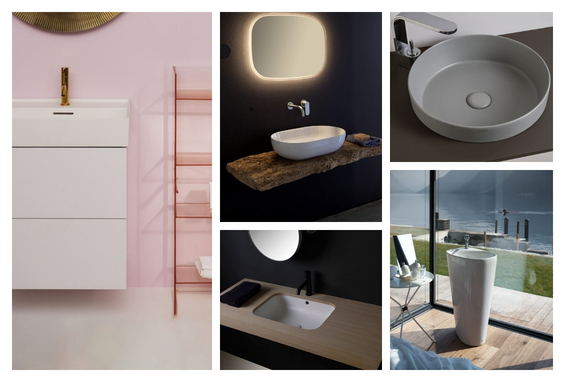
Most people choose wash basins the way they choose a photo: they fall for a shape on Pinterest, order it, and only find out afterwards that it doesn’t sit right on their counter, their wall isn’t built to hold it, or the tap they already own doesn’t fit the holes it comes with. After years of specifying and fitting bathrooms, we can tell you the shape is the easy part. What actually decides whether a basin works day to day is how it’s meant to sit in the room, whether that’s bolted to a wall, dropped into a counter, or standing on its own on the floor.
Each installation method comes with its own plumbing and structural demands, and mixing them up is one of the more expensive mistakes we see in bathroom renovations. Before you settle on a bowl shape or a matte finish, it’s worth understanding what each type of wash basin actually asks of your walls, your counter and your pipework.
In this guide, we go through the five basin types you’ll come across most often in a bathroom renovation, what to check before you commit to one, and a specific model from our own range for each.
What Type of Wash Basin Actually Fits Your Bathroom?
The install type matters more than the design, because it determines how much wall, counter or floor space you need, and what your plumber has to plan for before tiling starts.
Here’s what each type actually involves:
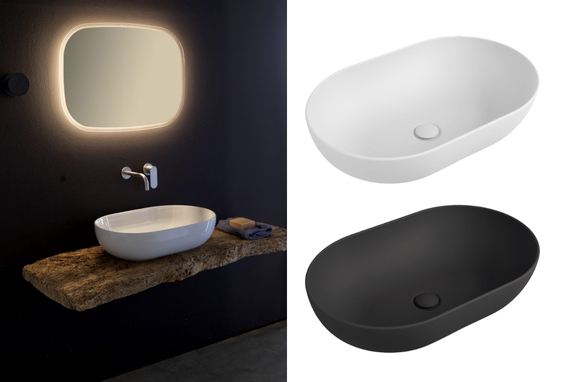
- Countertop basins: Sit fully on top of the vanity surface, with no cutout required. Counter top basins are the easiest to retrofit, but they raise the effective rim height, so it’s worth checking that against mirrors, cabinets and the height of the people using the room.
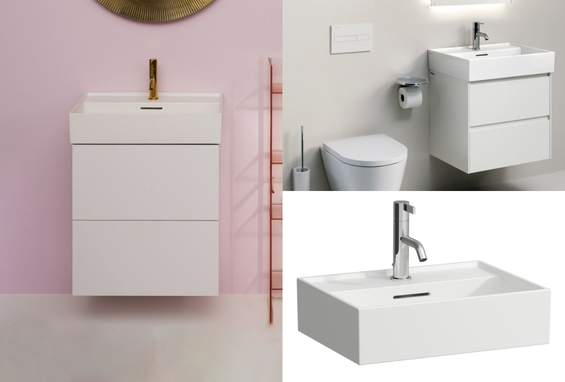
- Wall-hung basins: are fixed directly to the wall on a concealed bracket, leaving the floor clear underneath. That bracket only holds its weight properly if it’s anchored into masonry or a reinforced stud, not plain plasterboard, and the wall needs enough depth behind it to box in the pipework.
- Semi-recessed basins: sit partly inside a counter cutout and partly proud in front of it. The cutout has to match the basin’s own template closely; a few millimetres off and either the basin won’t seat flush, or the counter won’t fully support its front edge.
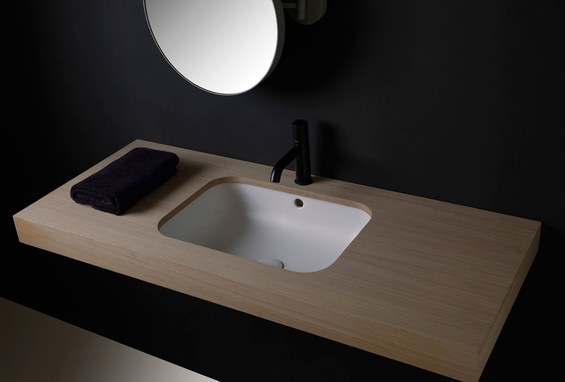
- Undercounter basins: are mounted with the rim below the counter surface, so there’s no lip to catch water or grime. The trade-off is that the cut edge of the counter is left exposed and has to be sealed properly, or it’ll swell or stain over time.
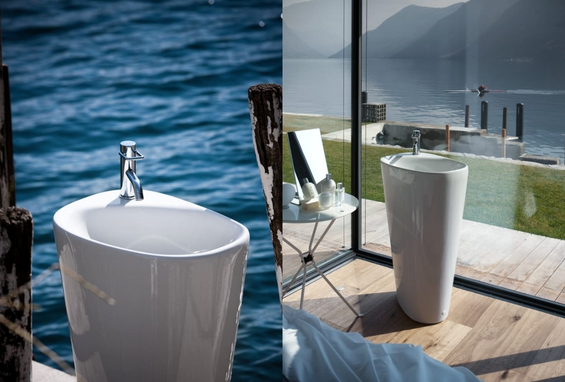
- Freestanding basins: stand on the floor as a single column or pedestal, usually hiding the supply and waste pipework inside the base itself. That means your plumber needs the exact rough-in position before the basin arrives, since there’s no vanity carcass to absorb a small error.
Which Wash Basin Material Actually Holds Up?
Most basins on the market are made from one of three materials, and the differences show up more in daily use than they do in a showroom.
- Fired, glazed ceramic: Is what most of the market is built from, and for good reason: the glaze is non-porous, so it resists staining and limescale, and it’s easy to keep clean with ordinary products. Its one weak point is a hard knock, since a chip exposes the more porous body underneath.
- Vitreous china: A denser fired porcelain, behaves similarly but with an even smoother, glass-like finish, which is part of why it’s a common choice for freestanding and pedestal designs.
- Mineral cast or solid surface: Wash basins feel warmer to the touch and can be moulded into a counter for a seamless look, but they’re more prone to fine scratches from abrasive cleaning products, and they show wear faster in a bathroom used heavily by kids.
For a family bathroom that gets daily, unsupervised use, we’d default to glazed ceramic every time. Save the solid-surface, seamless look for a guest bathroom or an ensuite where the finish matters more than the abuse it has to take.
Wash Basins for Every Type of Bathroom
Every bathroom has its own layout and its own daily routine, so the right basin type changes from one project to the next. Here’s a model we’d recommend for each.
1. Countertop: For Character and Easy Retrofits
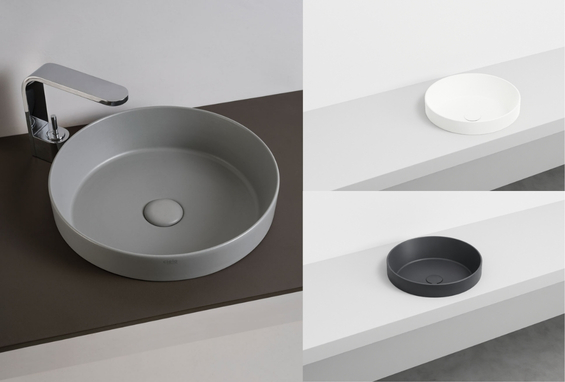
If you’re working with an existing vanity and don’t want to touch the counter, a countertop basin is the simplest way in. The App 62 by Flaminia is a good example: its clean, modern lines sit comfortably in both contemporary and more classic bathrooms, and it’s available in twelve finishes, so it’s easy to match to an existing colour scheme rather than build a whole bathroom around it.
2. Wall-Hung: For Small or Minimal Bathrooms
When floor space is the priority, nothing beats a basin that isn’t touching it. The Kartell 45 by Laufen is a wall-hung model with genuinely elegant proportions and it comes in eight finishes, from glossy and matte black through to white, which makes it easy to pair with a concealed cistern for a clean, floating look across the whole bathroom.
3. Semi-Recessed: The Middle Ground
If your vanity isn’t quite deep enough for a full undercounter basin but you still want more usable counter space than a pure countertop model gives you, semi-recessed is the compromise. The Enjoy Round by Cielo has a soft, circular shape and a genuinely huge finish range, including some lovely mineral-inspired tones, so it works as well in a warm, textured bathroom as it does in a stark white one.
4. Undercounter: For Easy-Clean Family Bathrooms
For a bathroom that gets used constantly, the lack of a rim is a real, everyday advantage: you can wipe the counter straight into the bowl instead of scrubbing around a seam. The Enjoy Rectangular by Cielo has a wide, generous basin area and classic, straight lines, and it shares the same broad finish range as the Enjoy Round, so the two pair well if you need two different basin shapes on the same counter.
5. Freestanding: For a Statement in a Spacious Bathroom
In a larger bathroom, or one with a more classic or period feel, a freestanding basin can carry the whole room on its own. The Palomba by Laufen is a floor-standing porcelain design with soft, sculptural lines and its smooth, seamless surface is genuinely easy to keep clean, which matters more than people expect on a basin with no cabinet underneath to hide daily splashes.
What If Your Bathroom Is Small?
A small bathroom doesn’t rule out a well-designed basin; it just narrows down which installation type makes sense. Wall-hung and semi-recessed basins are usually the better choice here, since both free up visible floor space and make the room read as larger than it is, even when the actual square metres haven’t changed.
If you’re working with a genuinely tight footprint, it’s also worth looking at slimmer basin depths rather than defaulting to a smaller diameter. A narrower basin often keeps more of its usable bowl space than a smaller round one, while taking up less depth against the wall.
So, How Do You Actually Choose the Right Wash Basin?
The right basin isn’t the one that photographs best. It’s the one your walls, your counter and your plumbing can actually support without a costly surprise halfway through installation.
Before you order one, it’s worth checking:
- Whether your wall can structurally support a wall-hung installation, or whether you’re better off with a countertop or freestanding model.
- Whether your counter has (or can have) a cutout that matches your chosen basin’s template.
- Whether the basin’s tap-hole configuration matches the tap you already own or plan to buy.
- How the material holds up to the way your household actually uses the bathroom.
- Whether the finish and shape genuinely fit the rest of the room, not just the basin on its own.
Get the installation type right first, and everything else, the finish, the shape, the details, becomes the easy part. A wash basin chosen this way doesn’t just look right on day one; it keeps working, cleanly and reliably, for as long as the rest of your bathroom does.