

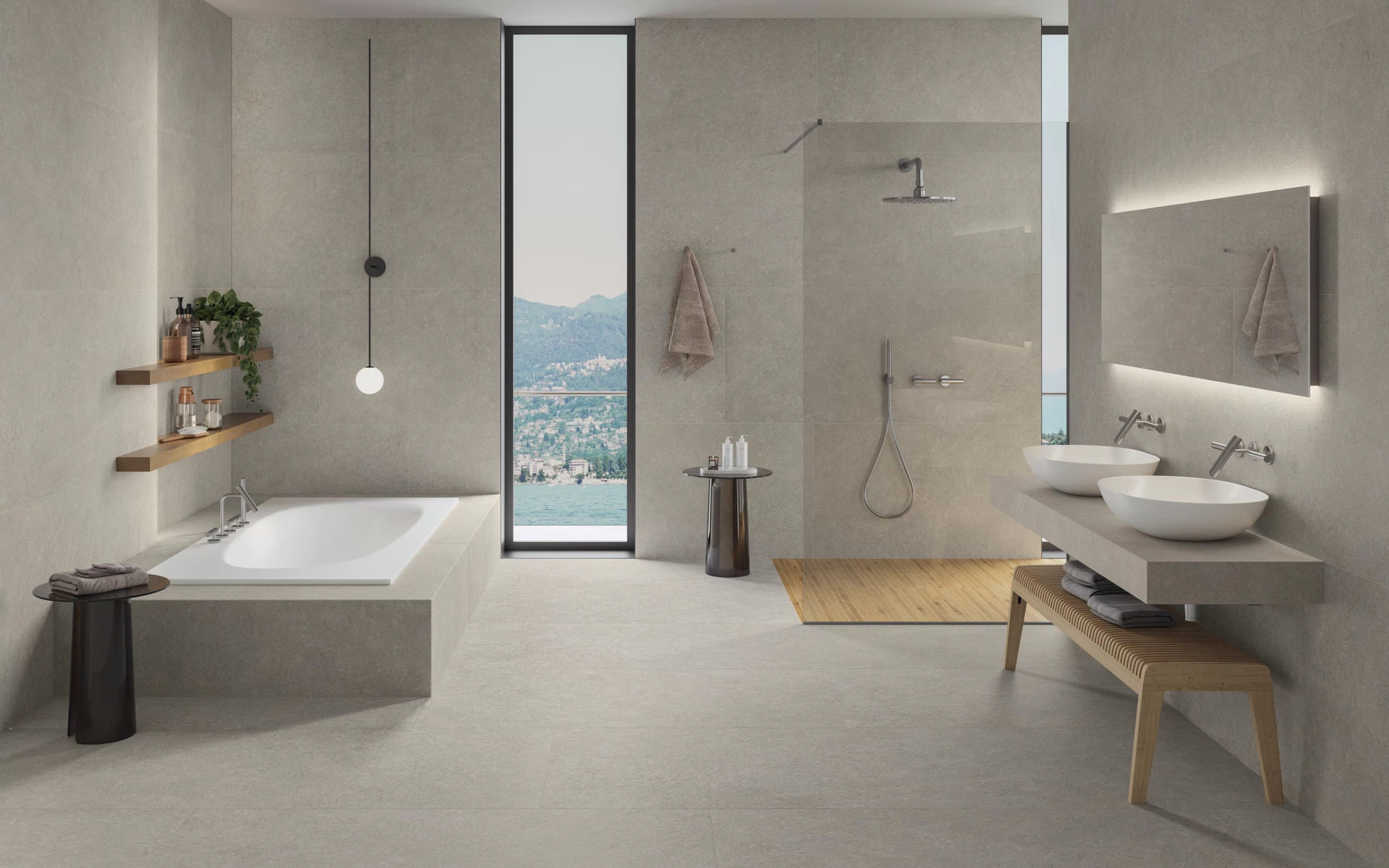
Most bathroom renovations don’t go wrong because someone picked the wrong tile colour. They go wrong because the decisions were made in the wrong order: the tile was chosen before the wash basin, the bathtub was ordered after the plumbing had already been closed up, the mirror was bought before anyone knew where the power supply would actually land.
The aesthetics, on the other hand, are the easy part. What determines whether a bathroom renovation finishes on time and on budget is how early three things were locked down: the layout, the plumbing, and the specific models of sanitary ware.
In this guide we break down the correct order of works, the choices that have to be made before the first tile goes down, and the mistakes we see repeated most often.
What Does a Bathroom Renovation Really Start With?
It starts with a decision that has nothing to do with design: are the plumbing positions changing or staying?
If the toilet, the wash basin and the shower stay where they are, the renovation is essentially a replacement of surfaces and equipment. If they move, you’re looking at new pipework, new drainage points, a possible change to the floor gradients, and clearly more cost and more time.
The second decision is just as practical: how much height and depth you have available. A wall-hung wash basin needs masonry that can carry the weight and enough wall depth to conceal the pipework. A concealed cistern needs a build-out that steals 15–20 cm from the room. These aren’t details that get sorted out along the way; they’re inputs that go into the drawing before the crew starts.
What Is the Correct Order of Works?
The sequence shifts from project to project, but the logic stays the same: each stage locks in the next one.
- Design and product selection: Specific products are chosen, not categories. Your plumber needs dimensions and supply positions, not “a wash basin around 60”.
- Strip-out: Removing old tiles, sanitary ware and, where needed, the existing floor.
- Plumbing and electrical: New supplies, drainage, lighting points and sockets. This is where 80% of the final result is locked in.
- Waterproofing: The stage that never shows and costs more than anything else when it’s skipped.
- Tiling: Floor and walls, with correct gradients towards the drain.
- Equipment installation: Sanitary ware, taps, enclosure, furniture, mirror, lighting.
A typical bathroom with no change of layout usually runs to two or three weeks of work. With plumbing relocation, the timeline stretches noticeably. The real enemy of the schedule, though, is rarely the crew: it’s the lead time on a product that was ordered too late.
How Do You Choose Bathroom Tiles?
In a bathroom, a tile isn’t judged on looks alone. It’s judged on slip resistance, water absorption, and how easily it cleans in a room with permanent humidity.
In practice, the floor needs a surface with certified slip resistance and low absorption, particularly in and around the shower. On the walls you have far more freedom, which is why that’s usually where the more striking choices go
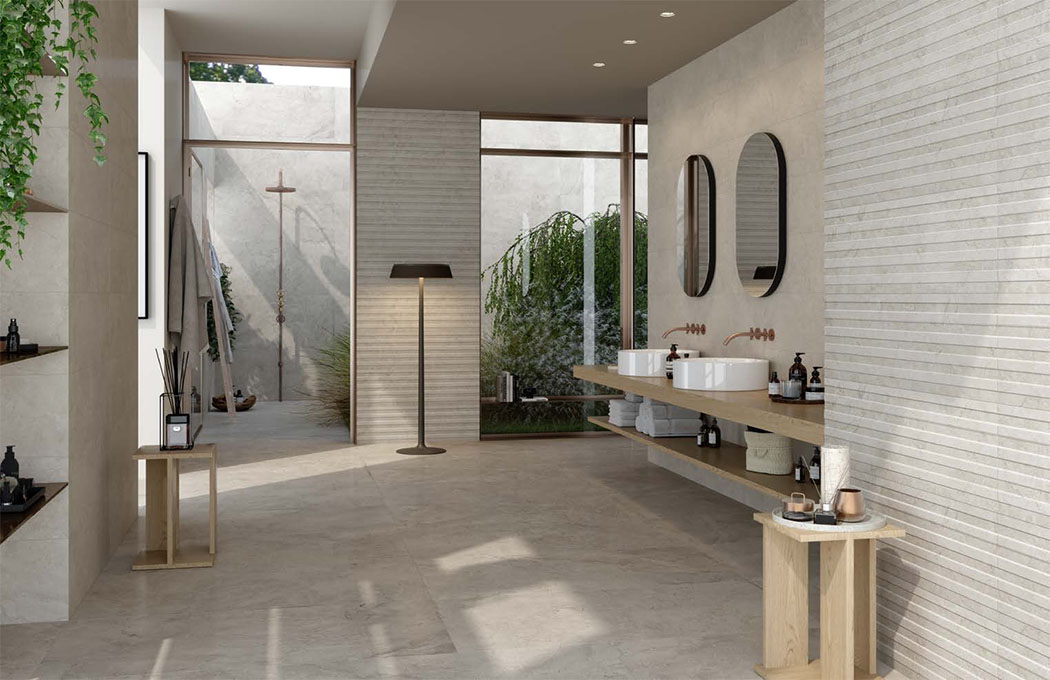
As for the look, two directions work consistently well. Stone look tiles give the bathroom a calm, mineral base that doesn’t tire the eye and hides the marks of daily use very well. They’re the safe choice when you want something that will still look right in ten years
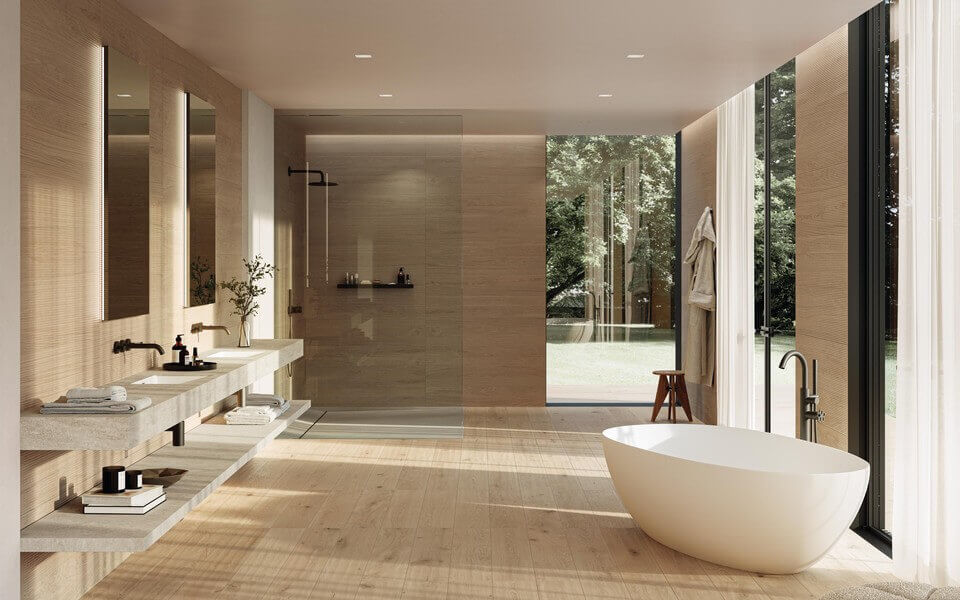
The second direction is warmth. Wood look tiles bring the natural feel of timber without its problems in a wet room, and they work well either across the whole floor or paired with a more neutral surface on the walls. One combination we recommend often: stone on the walls, wood on the floor.
One point that gets forgotten: the grout. A very light grout colour on a bathroom floor will be on your mind every week. Choose a tone slightly darker than the tile.
Which Sanitary Ware Decisions Drive the Plumbing?
This is the point where a bathroom renovation becomes technical. Sanitary ware isn’t a set of decorative objects you add at the end; it’s input data for your plumber.
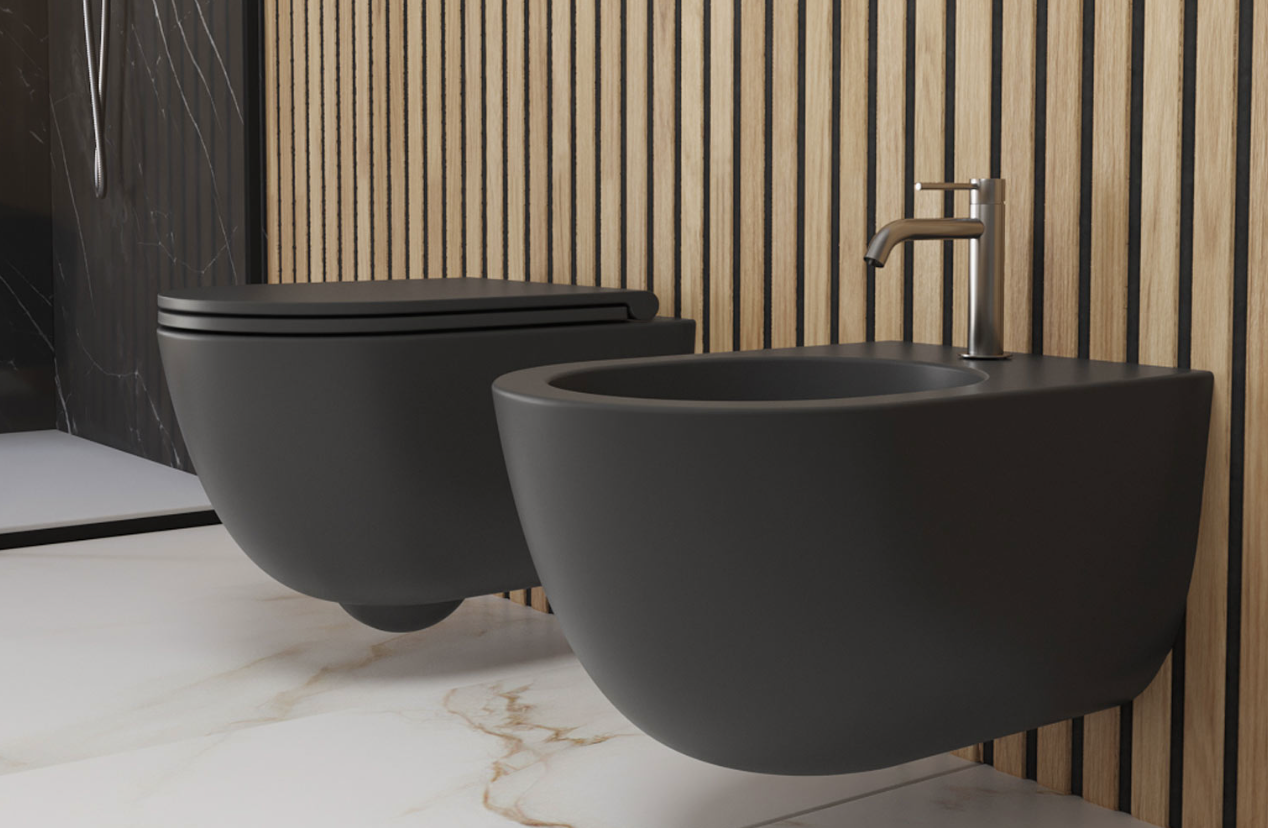
The choice of toilets and bidets determines whether you go with a concealed or an exposed cistern, how far the build-out will project, and at what distance the drainage sits. Going with a wall-hung toilet and a concealed cistern gives you the cleanest, “floating” result and clearly easier cleaning at floor level, but it has to be decided before the wall is built.
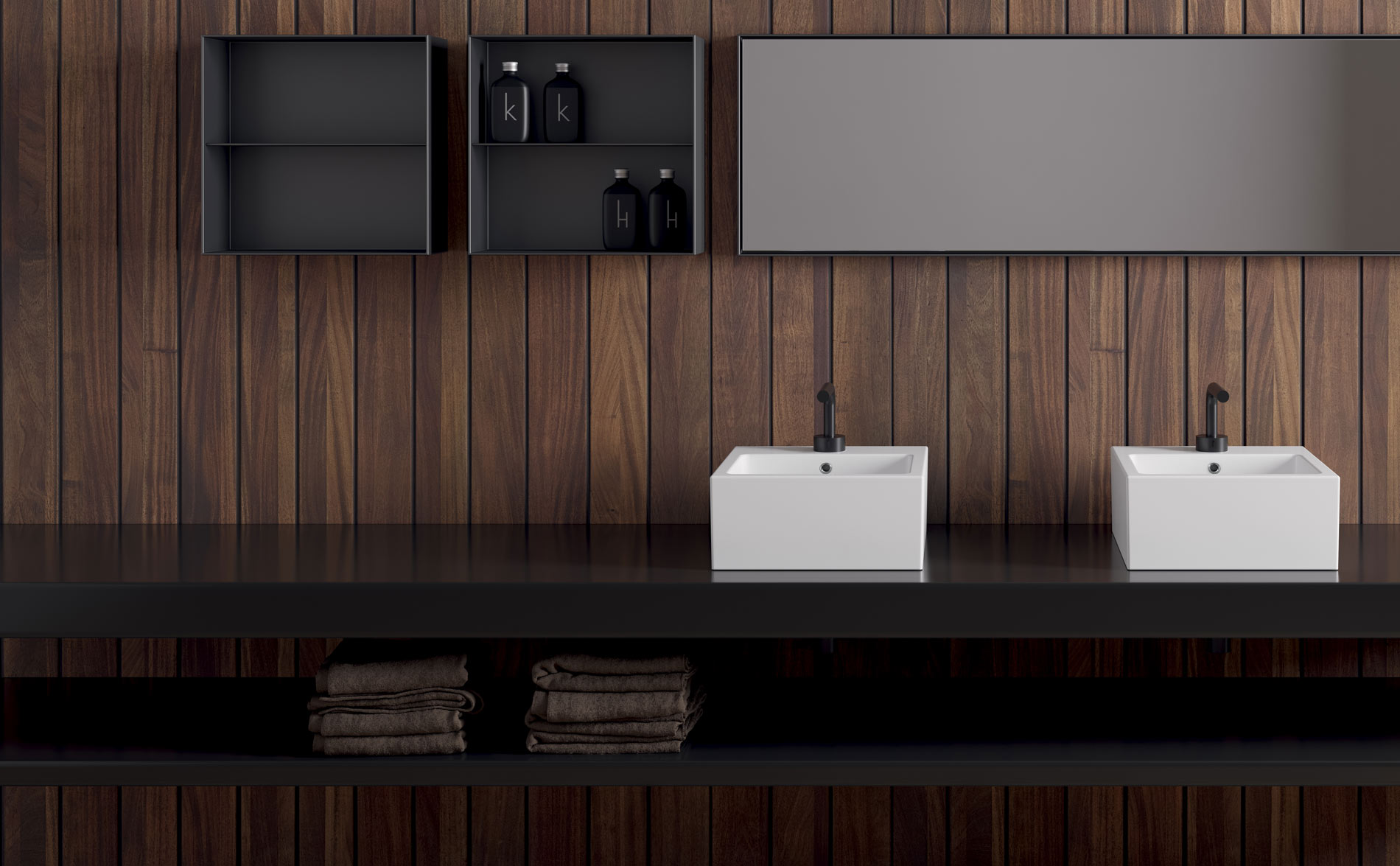
Similarly, wash basins are judged first on how they mount: counter-top, wall-hung, semi-recessed, undercounter or floor-standing. Each type carries different requirements for support, supply height and countertop cut-out. It’s the most common source of surprises we’ve seen, because the wash basin is usually chosen last and should be chosen first.
Bathtub or Shower?
The answer depends less on square metres and more on who uses the bathroom.
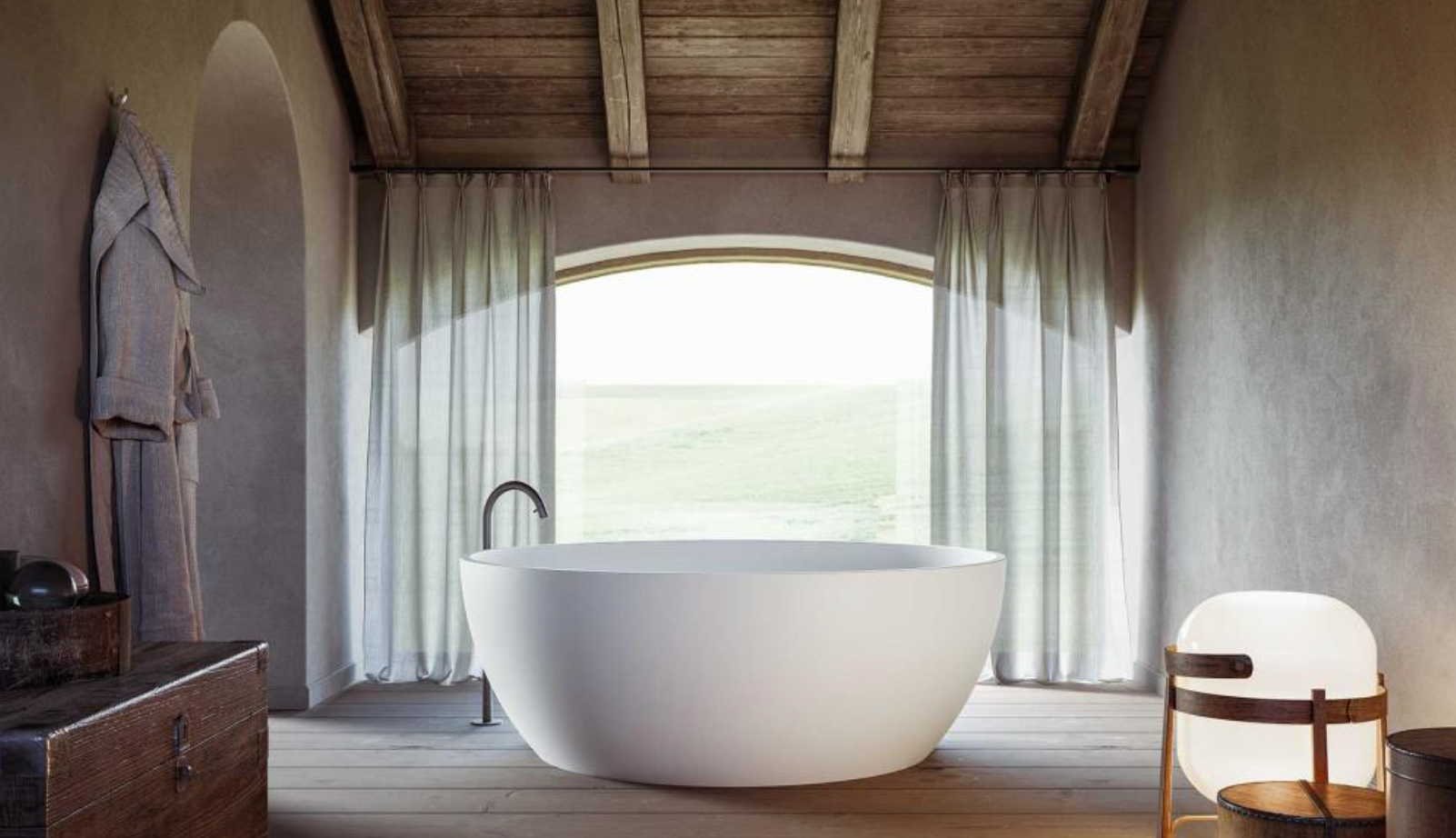
In households with small children, bathtubs remain the most practical solution, while in a master bathroom a freestanding tub works as the centrepiece of the room. It does, however, need real space around it to deliver, not just the centimetres it physically occupies.
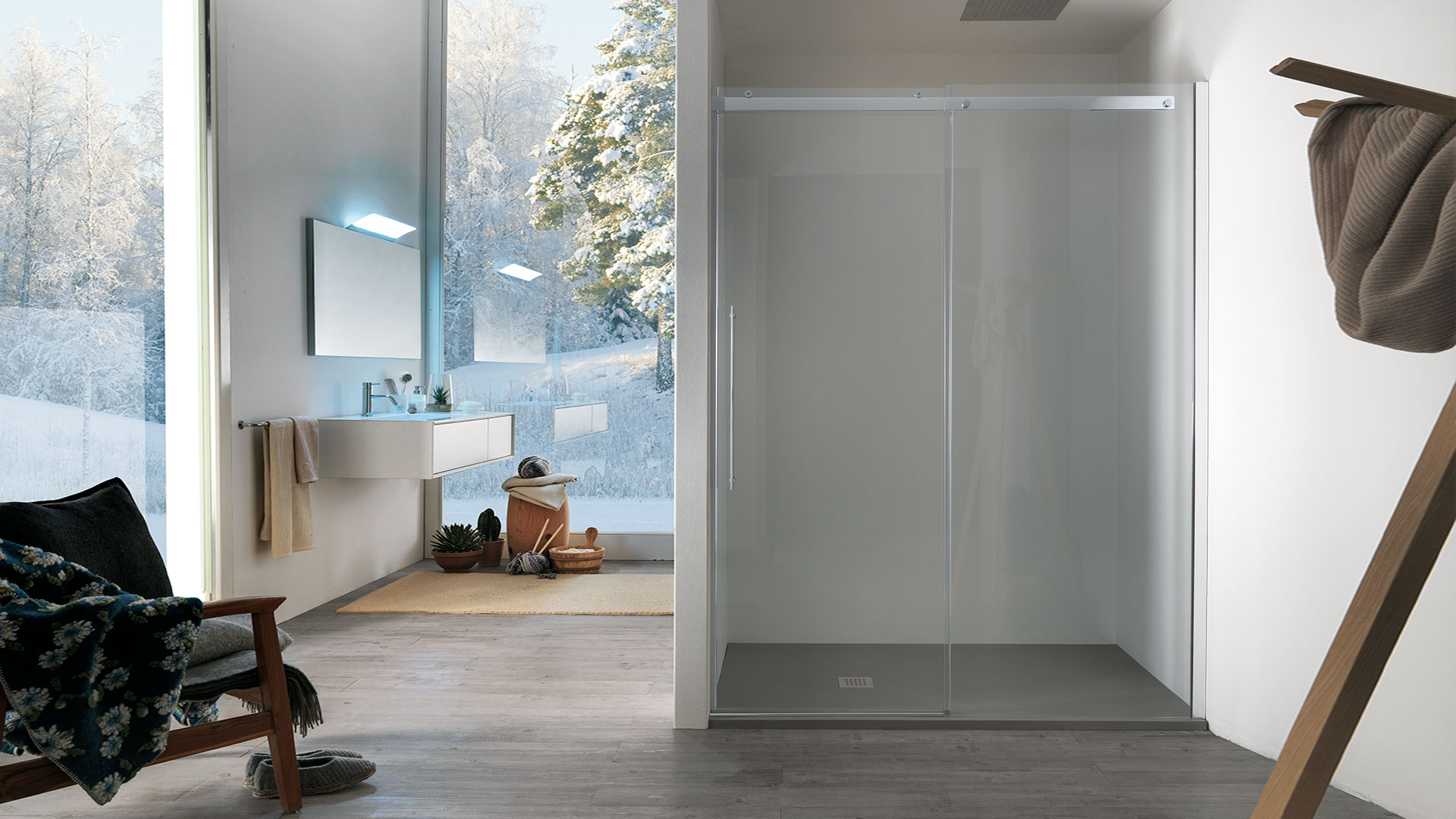
If usable space and everyday convenience are the priority, shower enclosures win almost every time. A well-chosen enclosure with a flush tray makes the bathroom look larger, cleans more easily and is far friendlier to older users. The critical point here is the floor gradients and the waterproofing, not the thickness of the glass.
In bathrooms of 6 m² and up, combining the two is feasible, as long as the shower isn’t squeezed below comfortable dimensions just to fit the tub in.
How Do You Tie the Finishes Together?
The place where it shows whether a bathroom renovation was planned or assembled piece by piece is the metals.
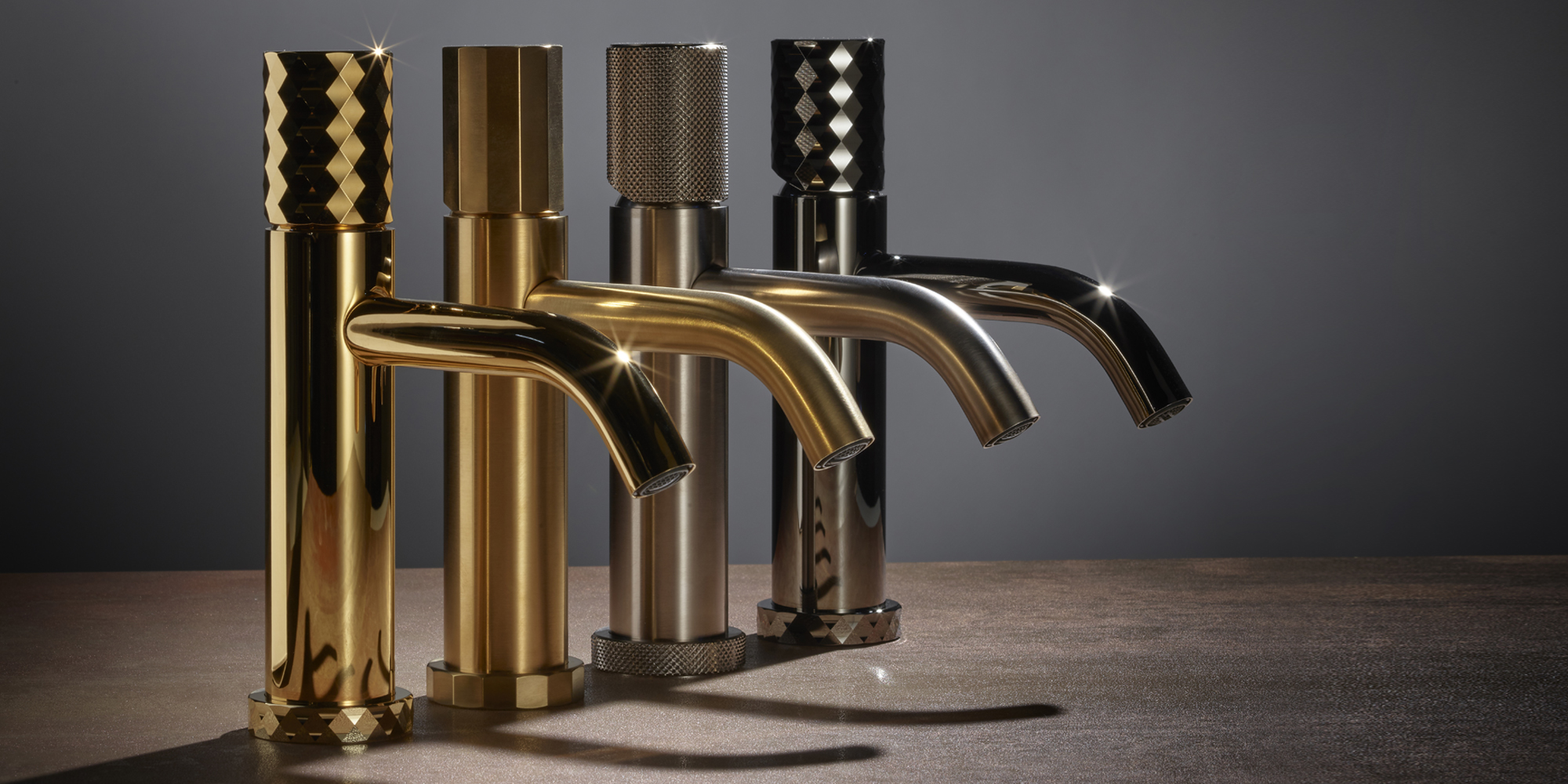
Bathroom taps set the tone for every other metal element: shower outlet, handles, drain covers, accessories. Pick one finish and hold it across the whole room. Worth knowing: chrome forgives limescale and fingerprints far more than matt black, which looks striking but needs regular wiping with a cloth.
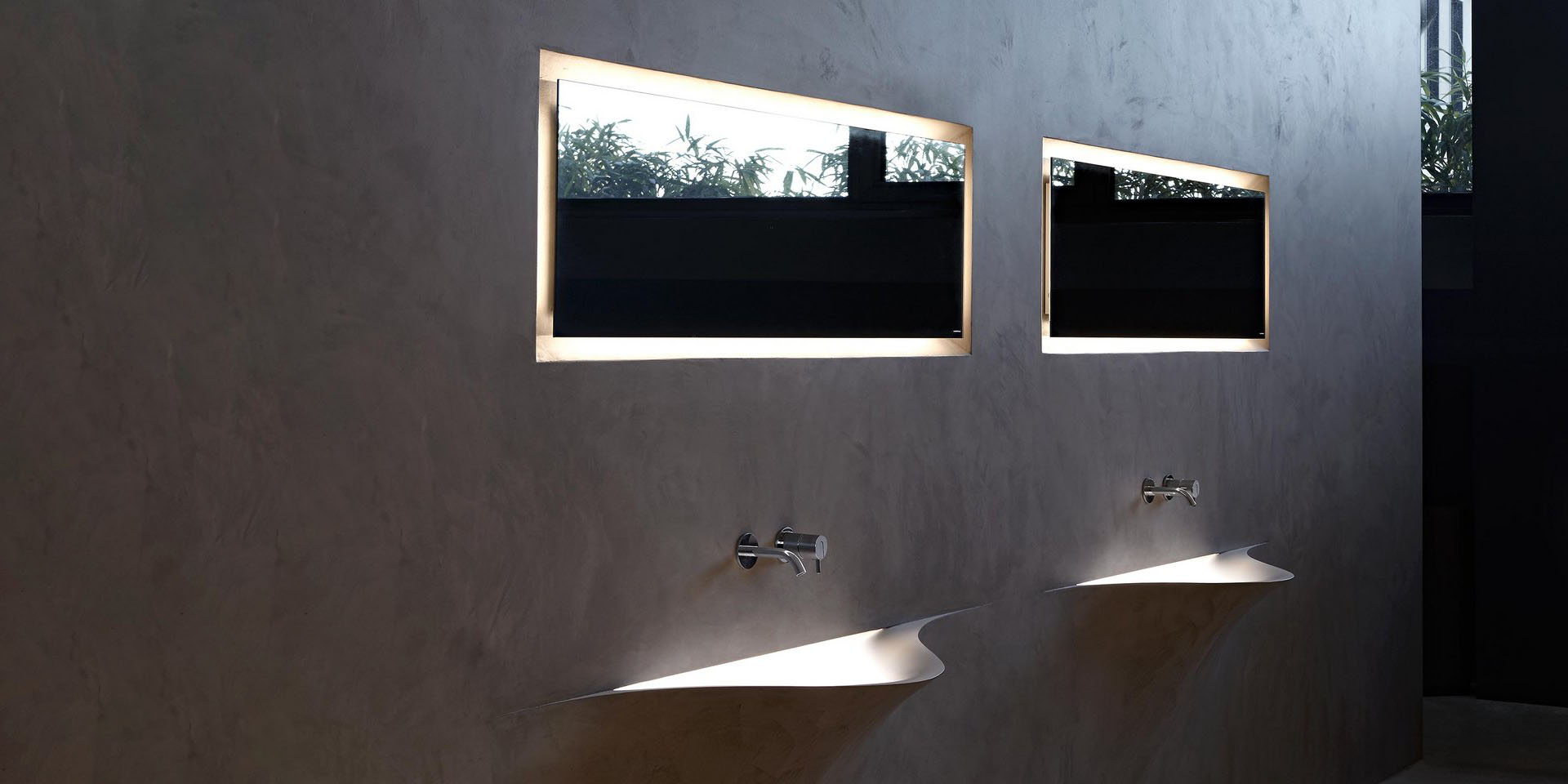
The second big difference in the final result is the lighting. Bathroom mirrors with integrated lighting solve two problems at once: they give proper frontal light on the face, where ceiling lighting leaves shadows, and they add depth to a narrow bathroom. They do, however, require a power supply in the right position and at the right height, which has to be given to the electrician before the walls are closed.
Which Mistakes Cost the Most?
The expensive mistakes in a bathroom renovation are almost always mistakes of timing, not of taste.
- Choosing products after the plumbing. Every product has its own dimensions and supply positions. Models first, pipework second.
- Ordering without allowing for lead times. One delayed product holds the entire project still.
- Cutting corners on waterproofing. It’s the only stage that, if it fails, requires everything above it to be torn out.
- Wrong slip rating on the floor. A tile suitable for a wall isn’t necessarily suitable for a shower floor.
- Inadequate ventilation. Without proper ventilation, moisture will show up in the grout and the furniture regardless of how good the materials are.
How Do You Start This Off Correctly?
Lock down the layout first, then the specific models of sanitary ware, and only then turn to tiles and finishes. Give your plumber and electrician complete information before they start, and don’t order anything without a confirmed lead time.
A bathroom renovation planned in this order isn’t just better looking on day one. It’s the one that asks nothing back from you in the years that follow.